

Category: Horror
Written By: Shamar (Vibez) Binns Date: 12/31/24
Nosferatu
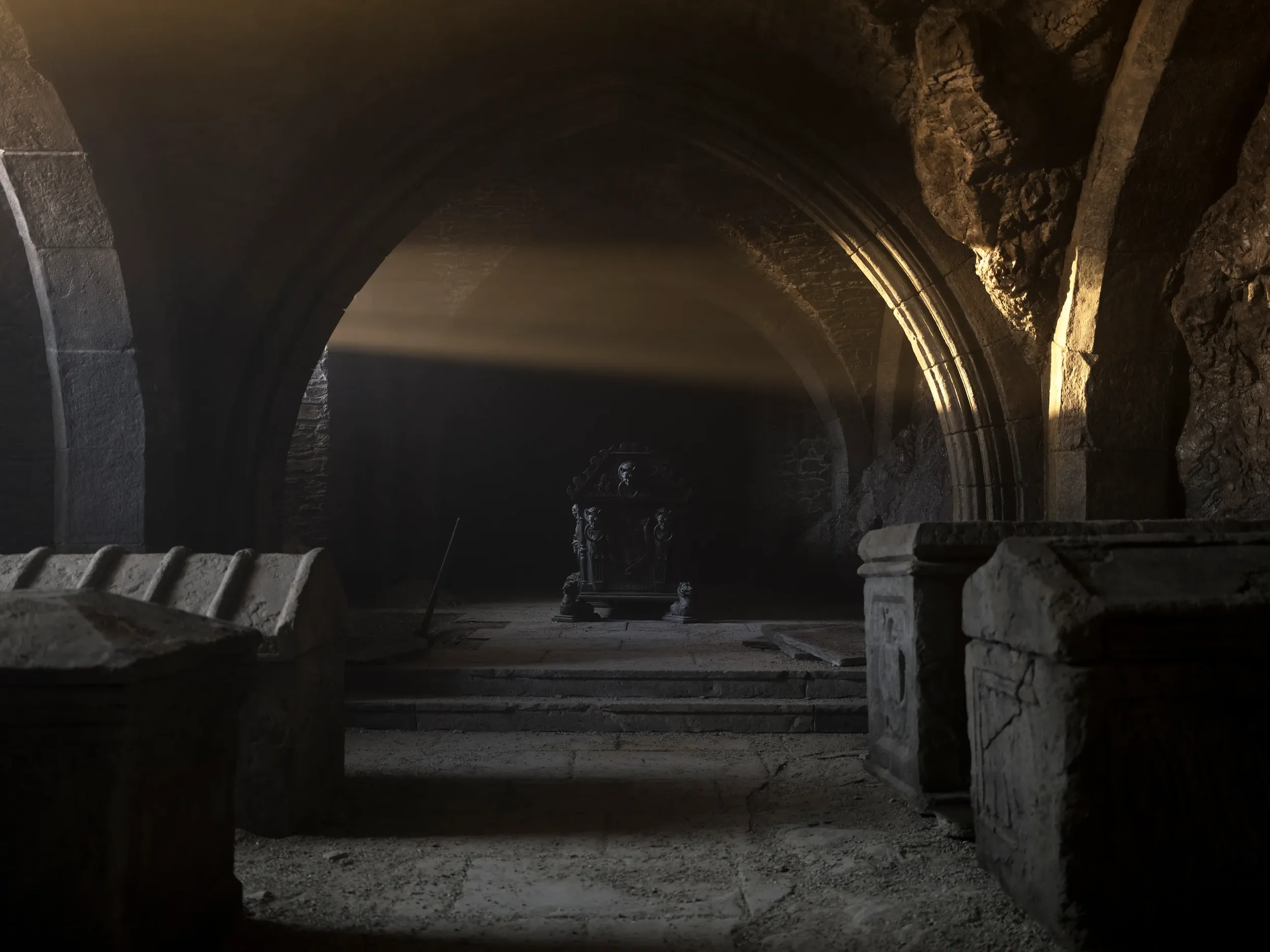
Nosferatu is a visually outstanding piece of cinema that completely immerses you in its dark and gothic world. From the opening moments, the film transports audiences into a haunting vision of 1800s Europe, where every shadow appears to hide something evil. The cold landscapes, candlelit rooms, decaying castles, and disease-filled streets create an atmosphere of melancholy and dread that rarely disappears.
Writer and director Robert Eggers proves once again that he understands how to bring the past to life with remarkable detail. His direction makes the movie feel like an ancient nightmare unfolding before your eyes. The costumes, architecture, language, and customs establish a believable historical setting, while the supernatural imagery makes the world feel cursed. Even when the story moves slowly, the atmosphere keeps you trapped inside its darkness.
Jarin Blaschke’s cinematography is easily one of the film’s greatest achievements. The use of shadows, moonlight, fog, and desaturated colors makes nearly every frame look like a gothic painting. Count Orlok is frequently hidden within darkness, forcing the audience to search the screen for him and creating the feeling that evil may be present even when it cannot be fully seen. The camera movements are controlled and hypnotic, pulling viewers deeper into Ellen’s fear and psychological torment.
Bill Skarsgård completely transforms himself into Count Orlok. His appearance, physicality, breathing, and deep voice make the character feel less like a romantic vampire and more like an ancient creature that should have remained buried. Skarsgård disappears so completely beneath the makeup and performance that he becomes almost unrecognizable. Every moment he is on screen carries an overwhelming sense of danger.
Lily-Rose Depp delivers the strongest performance of the film as Ellen Hutter, a woman caught between her love for her husband and the supernatural force that has haunted her for years. Depp portrays Ellen’s fear, desire, shame, and emotional isolation with an intensity that can be difficult to watch. Her physical performance is especially impressive, as her body appears to become another battleground in Orlok’s attempt to control her.
The connection between Ellen and Orlok gives the story its psychological depth. Their relationship is built around obsession, temptation, repression, and possession. Ellen is terrified of him, yet she also feels connected to the darkness he represents. That internal conflict turns her into more than someone waiting to be rescued. She becomes the emotional center of the story and the person who understands the threat more deeply than anyone else.
Nicholas Hoult also gives a strong performance as Thomas Hutter. His journey to Orlok’s castle contains some of the film’s most unsettling moments, especially as his excitement over a business opportunity turns into confusion and terror. Hoult captures Thomas’ helplessness without making him feel completely weak. His love for Ellen becomes his greatest motivation, even when he struggles to understand the supernatural bond controlling her.
Willem Dafoe shines as Professor Albin Eberhart von Franz, bringing intelligence, intensity, and a small amount of humor into an otherwise relentlessly dark story. He immediately understands that Ellen’s condition cannot be explained through traditional medicine. Dafoe brings enough eccentricity to make the professor entertaining, but he never treats the supernatural danger as a joke.
The sound design and music make the experience even more disturbing. Orlok’s breathing often announces his presence before he is fully revealed, while the silence surrounding certain scenes creates unbearable tension. The sound of rats, whispers, footsteps, and distant movement makes the environment feel infected by the vampire’s influence. Nosferatu does not depend on constant jump scares because its horror comes from the feeling that death is slowly approaching and cannot be stopped.
However, while the visuals and performances elevate the film, the hypersexual tone occasionally works against the horror. I understand that Eggers uses sexuality to explore repression, desire, control, and the dangerous connection between Ellen and Orlok. Still, certain moments focus so heavily on sensuality that they weaken the vampire’s threatening presence. Instead of increasing the suspense, the sexual imagery sometimes pulls attention away from the terror and makes the movie feel more uncomfortable than frightening.
The pacing may also divide audiences. Eggers allows the atmosphere to develop slowly, placing more importance on dread and visual storytelling than traditional scares. That approach will work for viewers who appreciate slow-burning gothic horror, but anyone expecting a faster or more aggressive vampire movie may find sections of the film difficult to connect with.
Despite those issues, Nosferatu remains an impressive reimagining of a legendary horror story. Robert Eggers does not simply recreate the 1922 silent film. He builds a disturbing world of his own, using the vampire to explore obsession, loneliness, death, and the darkness people attempt to hide within themselves. His commitment to the period and gothic atmosphere is visible in every frame.
In the end, Nosferatu is carried by its breathtaking cinematography, detailed production design, and phenomenal performances. Bill Skarsgård creates a terrifying version of Count Orlok, while Lily-Rose Depp gives the story its emotional and psychological power. The film’s heavy sensuality and slow pacing may prevent it from being equally effective for every viewer, but there is no denying its artistic ambition. It is one of the most visually remarkable films of 2024 and a gothic nightmare that remains inside your mind long after the shadows fade.