
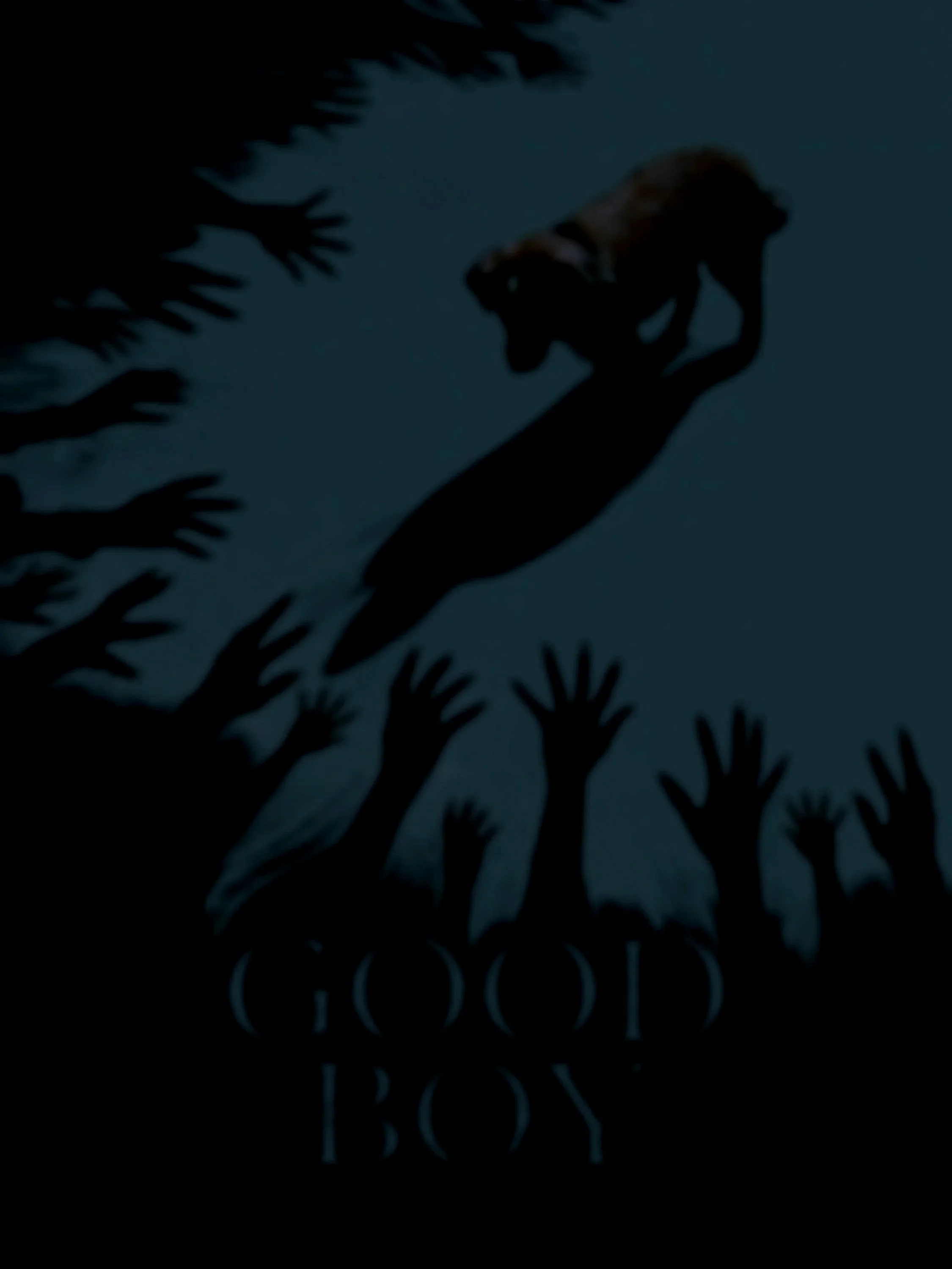

Category: Horror, Thriller
Written By: Shamar (Vibez) Binns Date: 11/3/25
Good Boy
Good Boy is a refreshing, emotionally powerful, and deeply unsettling entry in the horror genre. What immediately separates it from other supernatural films is its unique perspective: the entire story unfolds through the eyes of a loyal dog named Indy. By keeping viewers close to its canine protagonist, the film creates a hauntingly intimate experience that feels completely different from the typical haunted-house movie.
Writer and director Ben Leonberg deserves tremendous credit for turning such an ambitious concept into an effective feature-length film. He does not treat the dog’s perspective like a gimmick. Instead, Leonberg builds the cinematography, sound design, pacing, and emotional storytelling around the way a dog might experience an unfamiliar threat. The camera remains close to the ground, human faces are rarely shown clearly, and important information is communicated through movement, sounds, and Indy’s reactions rather than traditional dialogue. Leonberg also served as one of the film’s cinematographers and editors, giving the movie a consistent and carefully controlled vision.Good Boy was Leonberg’s feature directorial debut and was co-written with Alex Cannon.
The movie becomes even more impressive when you learn that Indy is Leonberg’s real-life dog and was not a professionally trained animal actor. Leonberg reportedly spent more than three years filming with Indy, carefully capturing brief moments and natural reactions that could be shaped into a complete performance. That patience can be felt throughout the film because Indy never appears overly trained or unrealistically human. He simply behaves like a loyal dog sensing that something is terribly wrong. The production captured hundreds of days of footage without relying on CGI to create Indy’s performance.
The story places us at Indy’s physical and emotional level. Human faces are rarely, if ever, clearly shown, which increases the feeling of isolation and confusion as supernatural events begin to unfold. We hear conversations and recognize that something is wrong, but our understanding is limited by what Indy can see, hear, and comprehend. That creative decision places the audience in the same vulnerable position as the film’s main character.
What makes Good Boy so effective is its emotional foundation. Indy is not simply a passive observer waiting for something frightening to happen. He is the film’s hero, recognizing the danger long before his owner fully understands it. However, despite his loyalty and awareness, he is limited in how he can communicate the threat or protect the person he loves. That helplessness creates constant tension because we understand his warnings even when the humans around him do not.
The concept reminded me of Courage the Cowardly Dog, with a loyal pet desperately trying to protect its owner from supernatural forces. However, Good Boy removes the cartoonish humor and replaces it with raw realism, sadness, and dread. Every strange sound, dark hallway, and unexplained movement becomes more frightening because we experience it through an animal that cannot understand why its familiar surroundings suddenly feel so dangerous.
At just over an hour long, the movie makes excellent use of its runtime. There is very little filler or unnecessary exposition. Instead, Leonberg steadily builds the tension as the supernatural presence becomes more threatening. The shorter runtime helps the film maintain its unsettling atmosphere without overstaying its welcome, while still giving the audience enough time to develop a genuine emotional connection with Indy and his owner.
You truly begin to fear for Indy because his bravery is matched by his vulnerability. He continues investigating unfamiliar sounds, entering dark rooms, and placing himself in danger because his instinct is always to protect his owner. That loyalty makes the experience both heartbreaking and inspiring. The horror works because the audience is not only afraid of what might happen to the humans; we are terrified that something may happen to the animal we have followed from the beginning.
If the Academy had an Oscar category for animal performances, Indy would absolutely deserve to take home the gold. His expressiveness, physicality, and emotional presence carry the entire movie. Without relying on dialogue, he communicates fear, confusion, concern, and courage in a way that feels completely natural. It is a remarkable performance and the main reason the film’s unusual concept works so well.
Good Boy proves that horror does not require excessive dialogue, elaborate visual effects, or nonstop jump scares to get under your skin. Through Ben Leonberg’s creative direction and Indy’s unforgettable performance, the film transforms a simple story about a loyal dog into a frightening and deeply emotional exploration of love, instinct, and the fear of losing the person you are trying to protect.