

Category: Drama, Biography
Written By: Shamar (Vibez) Binns Date: 01/19/25
A Complete Unknown
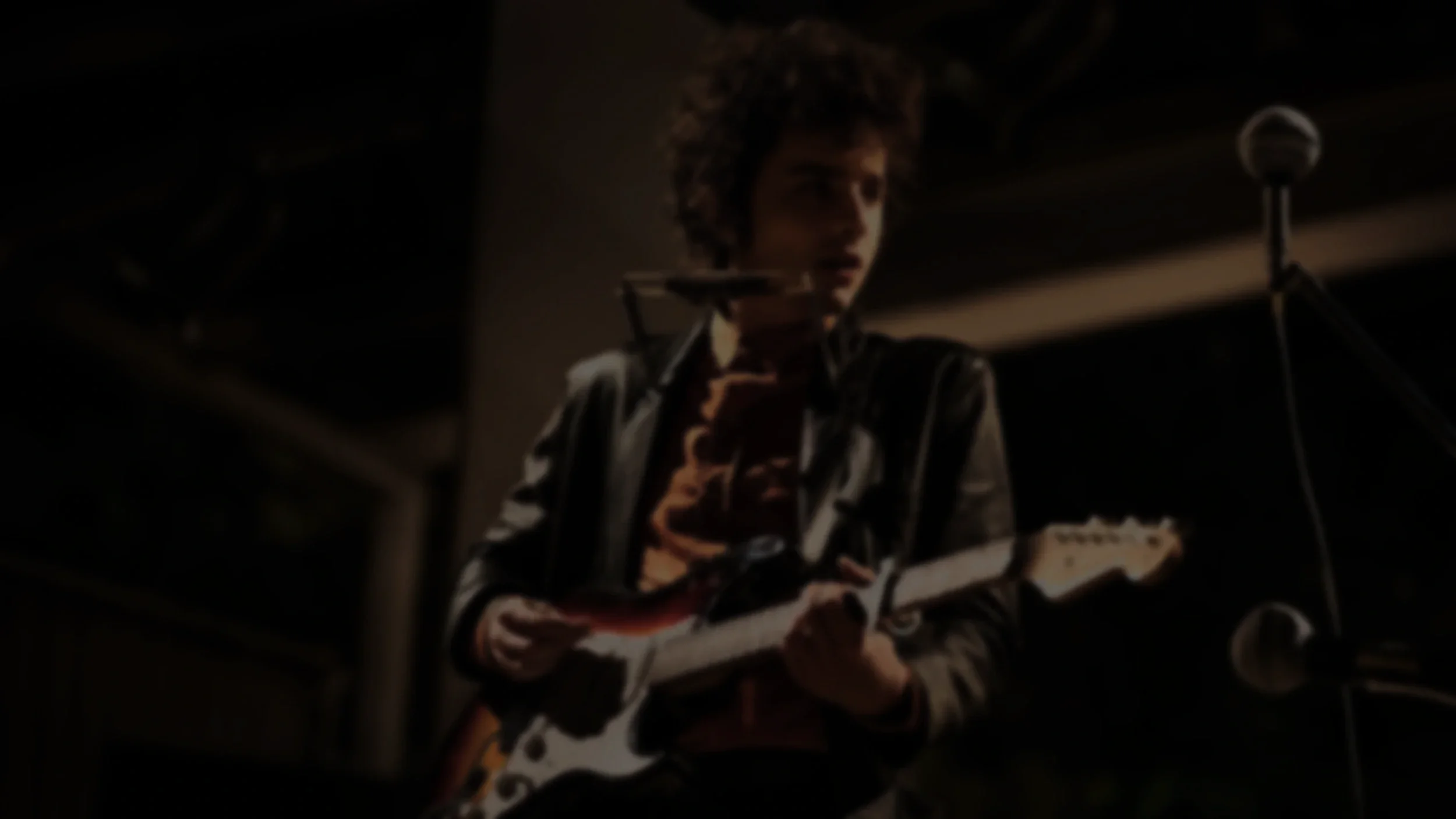
A Complete Unknown is a phenomenal portrayal of Bob Dylan’s rise to fame and the complicated personality behind one of music’s most influential voices. Rather than attempting to cover his entire life, the film focuses primarily on the years between 1961 and 1965, following Dylan’s arrival in New York City, his introduction to the folk music community, and the controversial moment when he decided to embrace electric music.
Timothée Chalamet delivers one of the strongest performances of his career as Dylan. He captures the singer’s distinct voice, guarded personality, sharp sense of humor, and complete devotion to his music without making the performance feel like a simple impersonation. Chalamet also performs the songs himself, which adds another layer of authenticity and allows the musical sequences to feel alive rather than overly polished.
What makes his portrayal especially compelling is that the film does not present Dylan as an easily understandable person. He can be charming and inspiring in one moment, then distant, selfish, or emotionally unavailable in the next. His love for music is undeniable, but so is his determination to remain free from the expectations placed upon him. The closer people attempt to get to him, the more he appears to pull away.
Director James Mangold handles Dylan’s story with confidence and restraint. After previously exploring the life of Johnny Cash in Walk the Line, Mangold once again demonstrates his ability to tell a musical story without allowing the music to overpower the characters. His direction immerses viewers in the folk scene of 1960s Greenwich Village, capturing the clubs, crowded apartments, political conversations, and sense of possibility surrounding that era.
The movie becomes especially interesting when it examines the conflict between artistic freedom and public ownership. The folk community embraces Dylan and helps turn him into an important voice of his generation, but that support eventually becomes another set of expectations. Once audiences decide what Dylan represents, they become angry when he refuses to remain that person. His decision to go electric is treated as more than a change in sound. It becomes a declaration that an artist should have the freedom to evolve, even if that evolution disappoints the people who supported them.
The supporting cast is excellent. Edward Norton brings warmth and sincerity to Pete Seeger, portraying him as both a mentor and a believer in the social power of folk music. His relationship with Dylan adds emotional weight to the story because his disappointment does not come from jealousy. It comes from the fear that Dylan is abandoning something meaningful that they helped build together.
Monica Barbaro is also captivating as Joan Baez. She presents Baez as an accomplished artist with her own voice, talent, and convictions rather than simply another person in Dylan’s life. Her chemistry with Chalamet is magnetic, but their connection is filled with tension because Joan understands Dylan’s emotional distance better than most people. Their musical performances together are some of the film’s most beautiful and memorable moments.
Elle Fanning delivers a deeply emotional performance as Sylvie Russo, a character inspired by Suze Rotolo. Sylvie represents the personal life Dylan continuously places behind his ambition. Fanning communicates heartbreak through quiet expressions and restrained reactions, allowing us to understand how painful it is to love someone who is always searching for the next song, audience, or version of himself.
Boyd Holbrook stands out as Johnny Cash, bringing confidence, humor, and gravitas to the film. His version of Cash feels like one of the few people who understands Dylan’s desire to resist expectations. Although his screen time is limited, Holbrook makes every appearance memorable and gives Dylan the encouragement to remain true to his own artistic instincts.
The music is naturally one of the movie’s greatest strengths. The performances do more than recreate famous songs; they show how Dylan’s music developed alongside his changing identity. Each song feels connected to what he is experiencing emotionally, politically, or creatively. Even viewers who are not deeply familiar with Dylan’s catalog can understand why his writing affected an entire generation.
Visually, the film beautifully recreates the early 1960s. The cinematography, production design, and costumes make Greenwich Village feel lived-in rather than artificially constructed. Smoke-filled venues, dimly lit rooms, winter streets, and intimate performances create the feeling that we are watching a cultural movement form in real time.
That said, the movie’s narrow focus is also its greatest limitation. While concentrating on this specific period gives the narrative a clear direction, I still wanted to see more of Dylan’s formative years and later life. The film ends just as another stage of his journey begins, leaving audiences without much insight into how his career, relationships, and identity continued to evolve. For viewers unfamiliar with his complete legacy, the story may feel like only one chapter of a much larger book.
However, I understand why Mangold chose this structure. A Complete Unknown is less interested in explaining every stage of Bob Dylan’s life than in examining the moment he became impossible to define. By ending with his transition into electric music, the film captures the central contradiction of Dylan: everyone wanted him to represent something, but he refused to belong completely to anyone.
In the end, A Complete Unknown is a powerful and beautifully performed tribute to an artist who changed music by refusing to remain comfortable. Timothée Chalamet gives a raw, authentic, and deeply committed performance, while Monica Barbaro, Edward Norton, Elle Fanning, and Boyd Holbrook help bring Dylan’s world vividly to life. The limited timeline prevents the film from becoming a complete portrait, but the chapter it chooses to tell is emotional, engaging, and musically unforgettable.